
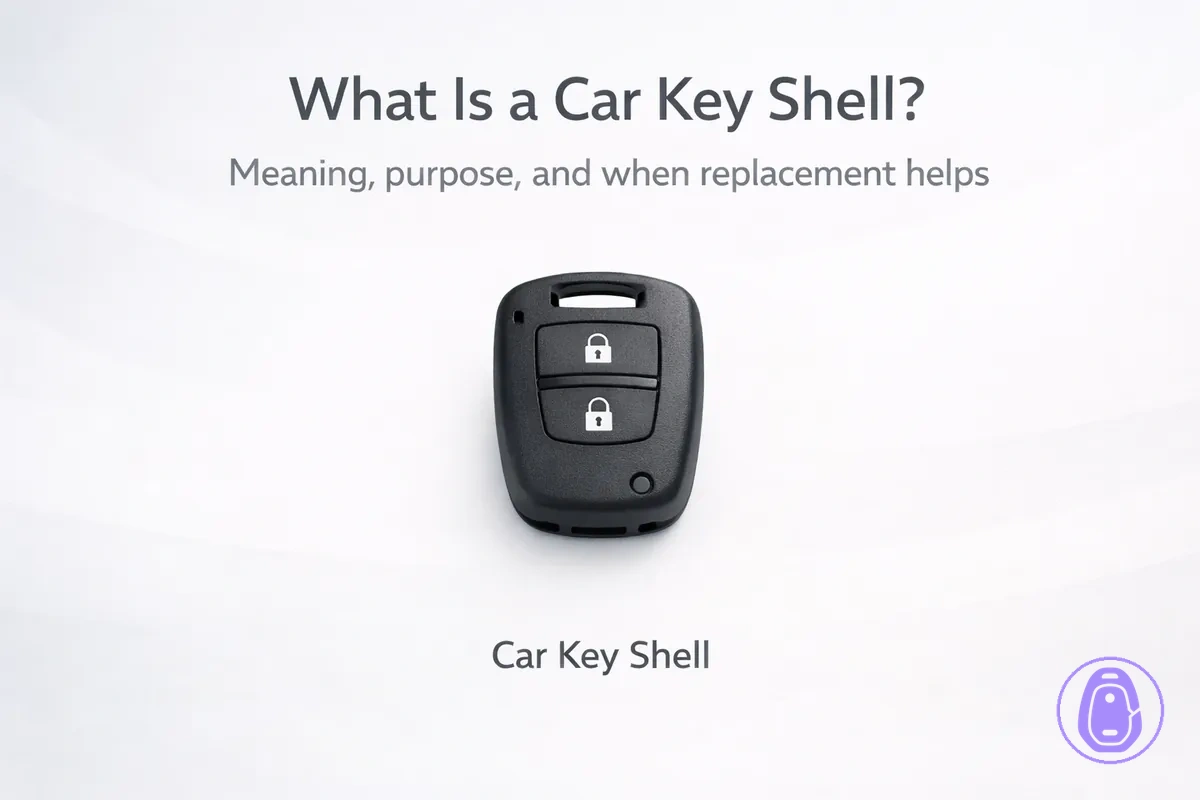
Car key shell meaning, purpose, and when replacing the housing helps
A car key shell is the outer housing of a car key or key fob. This housing typically protects the internal electronics, such as the circuit board and transponder chip, from daily wear. The shell covers the exterior structure but does not include those internal components.
The car key shell provides protection against impacts, grime at seams, and button wear during everyday use. Replacing the shell can restore usability when physical damage affects closure or button feel, though outcomes depend on proper fit and condition. Note the common confusion: a shell serves as replacement housing, unlike a cover or case for add-on protection or a full key fob that includes electronics.
Car key shell definition and scope inside a key fob
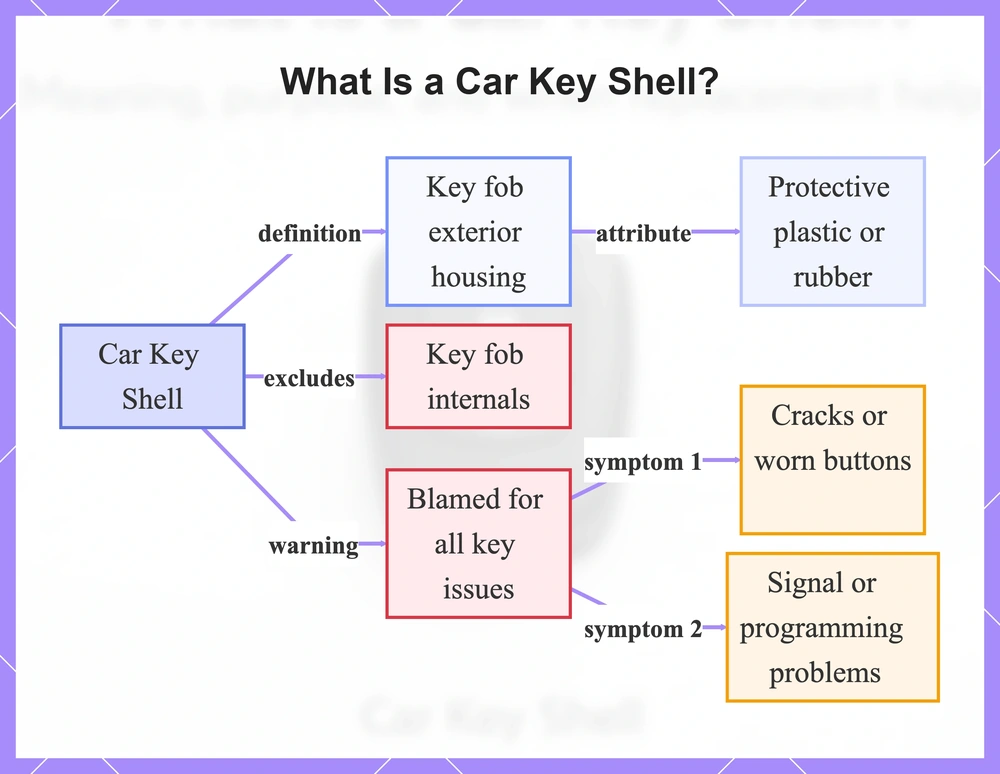
A car key shell is the outer housing that forms the exterior of a key fob. The key fob shell encases the visible structure around the key's internals. It refers to the protective plastic or rubber housing users handle daily.
Key fob internals like the circuit board, transponder chip, and battery fit inside the outer housing, separate from the car key shell. These internal electronics handle functions on their own. For broader context on car key shells, see the Car key shell hub.
People often mistake all key issues for shell problems, but physical housing damage like cracks or worn buttons from handling differs from electronic failure. Signal or programming problems come from internal electronics like the circuit board or transponder chip. Housing issues affect protection and feel, while signal disruptions impair remote operation before inspecting outer parts.
This flowchart defines the car key shell, its materials and exclusions, plus common mistakes in attributing key fob issues.
What the car key shell includes on the outside
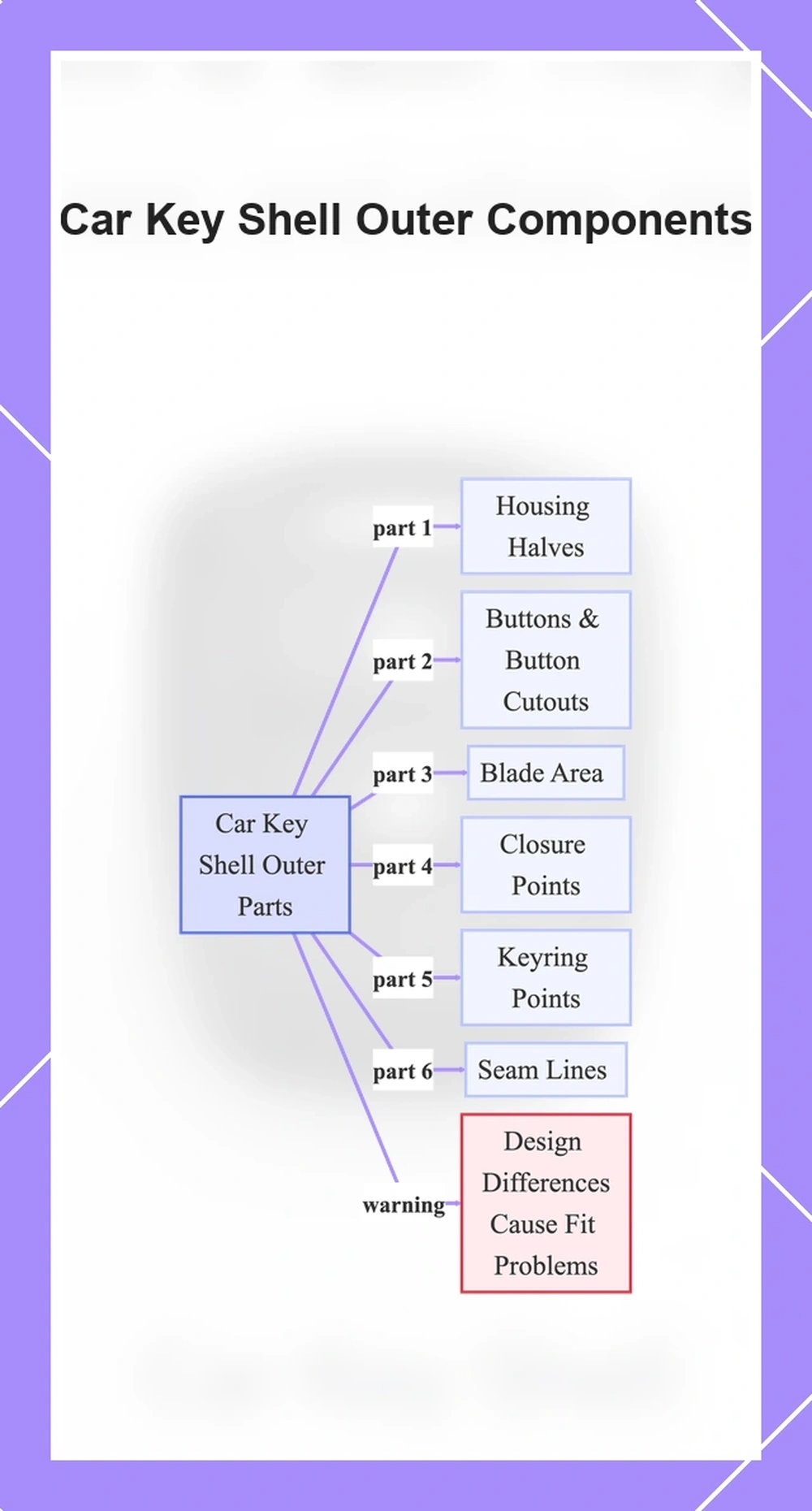
The car key shell includes visible outer components that form its protective housing and allow recognition in everyday use. These outer shell parts distinguish from internal electronics like circuit boards that stay hidden inside. Key elements include:
- Housing halves: The two main outer sections that split along a seam to enclose internals and provide the overall shape.
- Buttons and button cutouts: Raised or flush areas with openings that align over the rubber button pad for pressing.
- Blade area: The slot or hinge/pivot interface where the metal key blade inserts or folds in.
- Closure points: Clips or screws along edges that secure the housing halves together.
- Keyring points: A reinforced loop or hole for attaching to a keychain without weakening the structure.
- Seam lines: Visible edges where halves meet, often showing wear from opening.
Picture two car key shells side by side that look similar in size and color.
One might have button cutouts for three buttons while the other fits four, or one uses clips for closure while the other needs tiny screws, which affects internal seating. Such differences can cause fit problems despite the similar look. For a deeper breakdown of Car key shell parts, see the dedicated guide.
This flowchart shows the main visible outer parts of a car key shell that form its housing, along with a key design consideration.
Housing halves, button area, and blade section as the visible structure
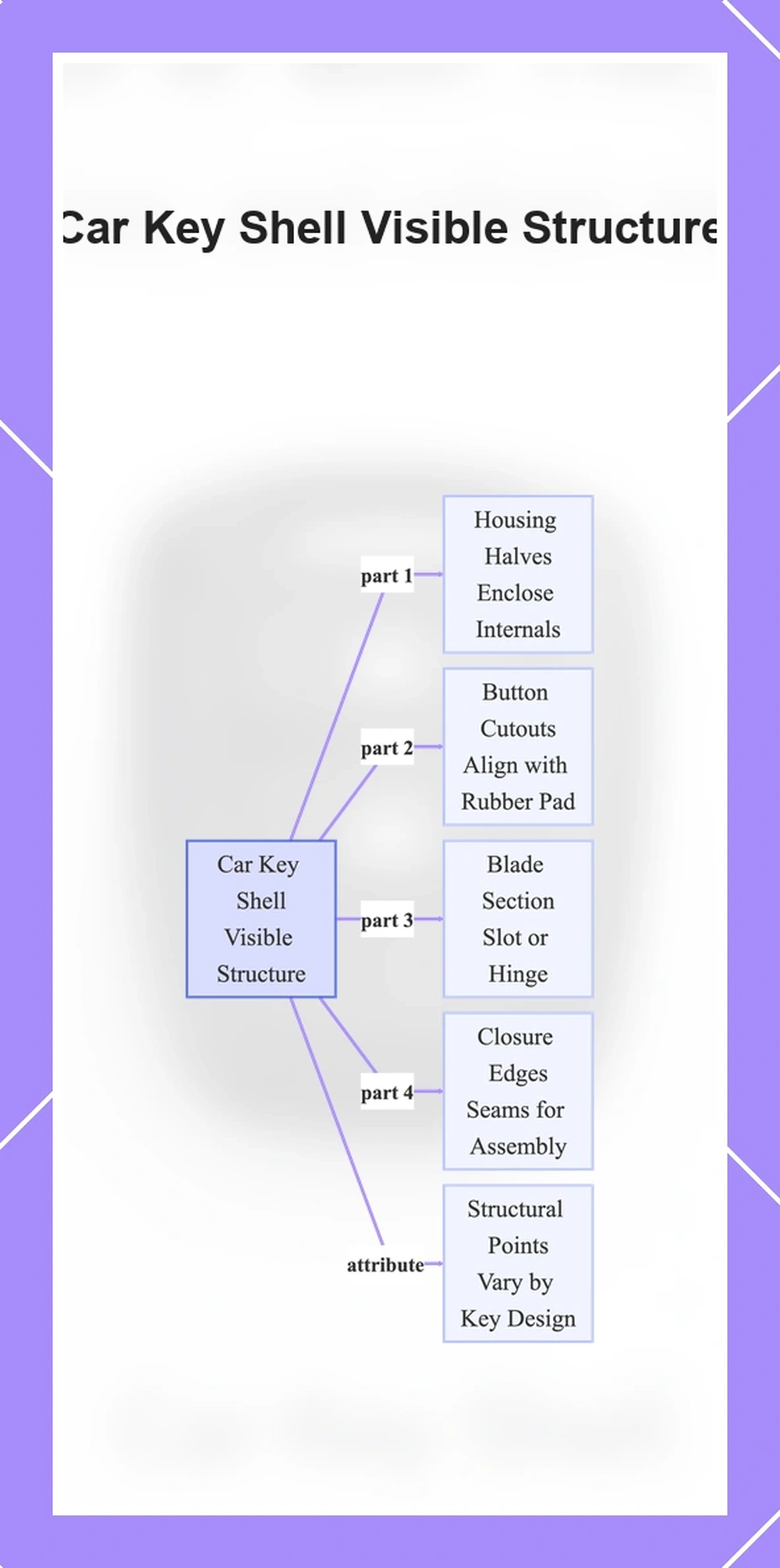
The main visible areas of a car key shell consist of the housing halves that enclose the internals, button cutouts that align with the rubber pad for presses, the blade slot or pivot/hinge area that accommodates the key blade, and closure edges where the halves join. Seams at the closure edges and gaps around button cutouts and blade slots allow assembly access and component seating while enclosing the internals. The blade area typically features a fixed slot or flip-style hinge/pivot, and these structural points vary by key design.
This flowchart shows the main visible areas of a car key shell, their roles, and design variations.
Common shell variants that change the outer shape and closure style
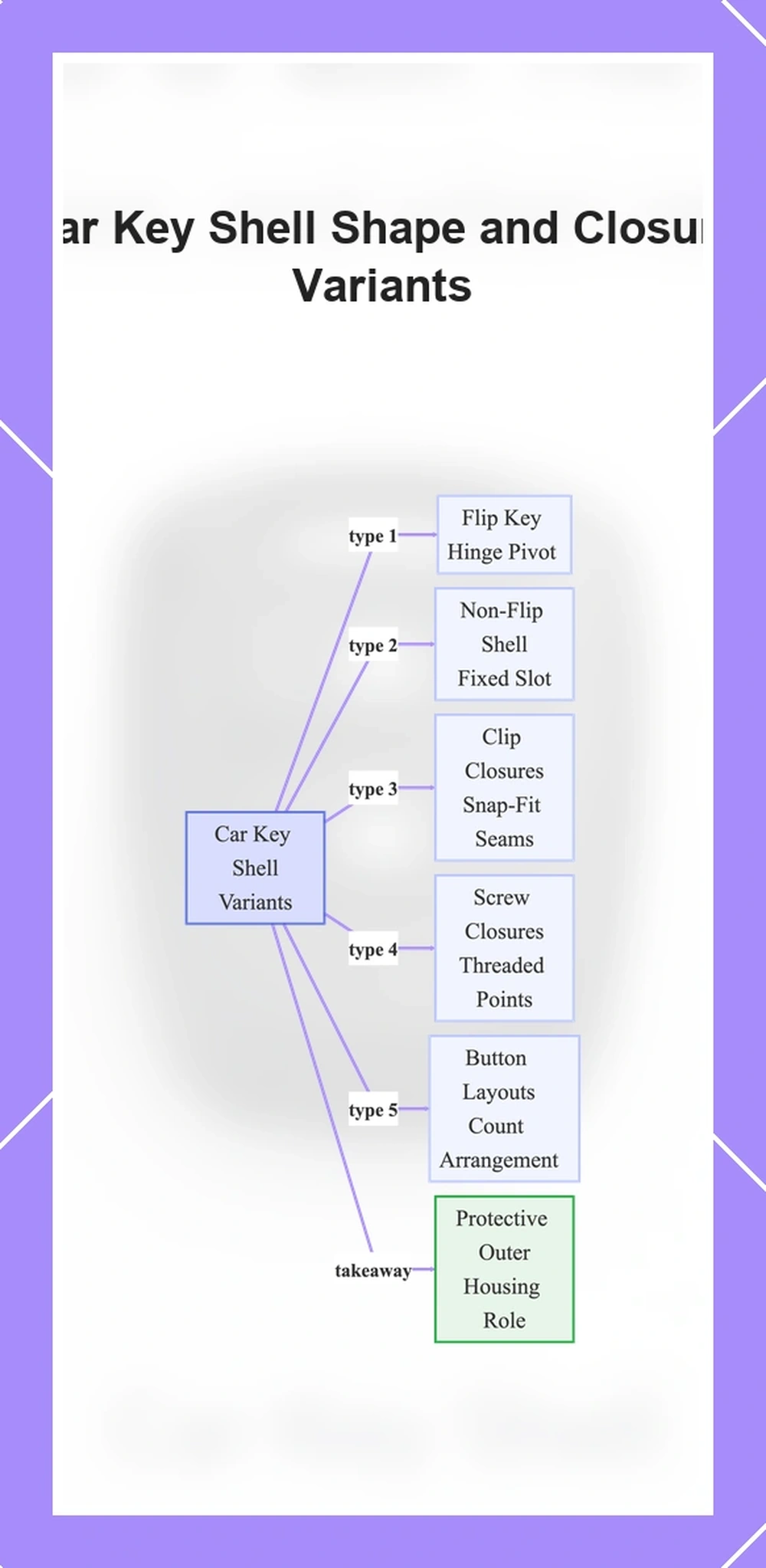
Car key shells show common variants in outer shape and closure style that affect visual recognition. These include flip key versus non-flip profiles, clips versus screws for closure, and button layout differences. The contrasts below outline what changes while the core shell role remains consistent.
- Flip key vs non-flip: Flip key shells include a hinge or pivot for folding the blade into a compact profile, whereas non-flip shells have a fixed blade slot for a straighter shape; both enclose the internal electronics as the outer housing.
- Clips vs screws: Clip closures use snap-fit mechanisms along the seams for quick assembly, while screw closures rely on threaded fasteners at specific points; the joining method varies but the halves still form the protective shell.
- Button layout: Button layouts differ by count and arrangement, creating varied cutout patterns and wider or narrower upper geometry; more buttons expand the button area yet the shell continues as the external housing.
This chart outlines common variants in car key shells' outer shape and closure styles, their key distinguishing features, and the consistent protective housing role.
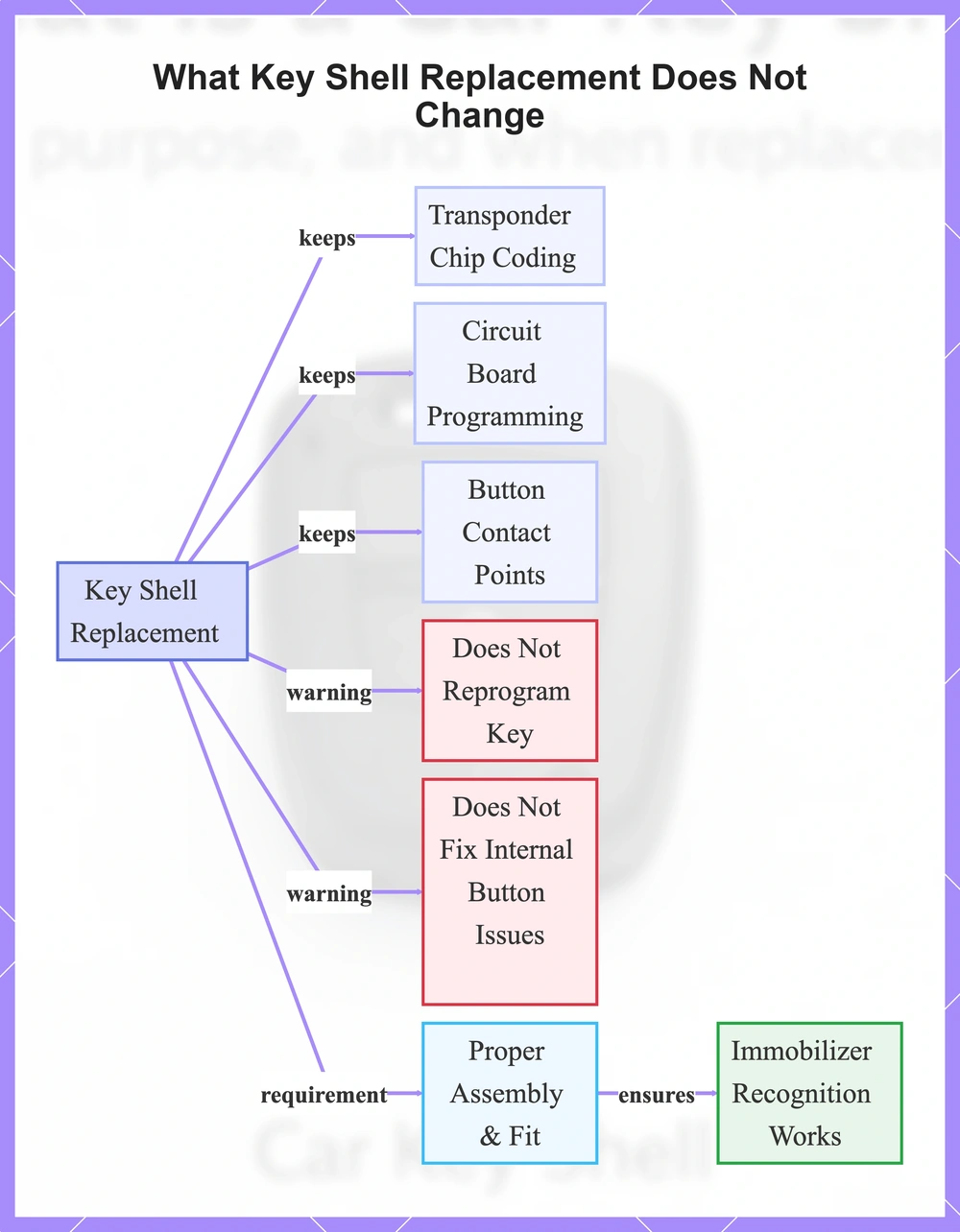
What a shell replacement does not change in your key
A car key shell replacement leaves the core identity and function of the internal electronics intact. The transponder chip and circuit board retain their original programming and code for immobilizer communication. The outer housing only refreshes appearance and protection. Here are key elements that do not change:
- The transponder chip and its coded signal to the immobilizer.
- The circuit board and its programming for key recognition by the car.
- Contact points for buttons and their connection to remote electronics.
- The key's electronic code tied to the specific vehicle.
- Immobilizer chip function, if present separately.
Many think a new shell fixes every key problem or reprograms the electronics, but it only handles the outer housing. Signal or programming issues usually come from the internal electronics or battery. Battery replacement sorts weak signals, while a full key fob replacement tackles bigger electronic failures. Shell swap results depend on fit and assembly, since seating affects button contact and closure feel.
Question: “Will replacing the shell reprogram the key?”
Answer: No, replacing the shell does not reprogram the key. The programming stays in the circuit board and transponder chip. Proper assembly usually keeps the original code working for immobilizer recognition.
Question: “Can a new shell fix buttons that don’t work?”
Answer: A new shell alone does not fix non-working buttons from internal electronics issues. It may improve button feel from prior poor fit, but circuit board or rubber pad problems continue. Assembly alignment influences contact reliability in most cases.
This flowchart shows the core elements left intact by a key shell replacement, along with what it cannot fix and key assembly requirements.
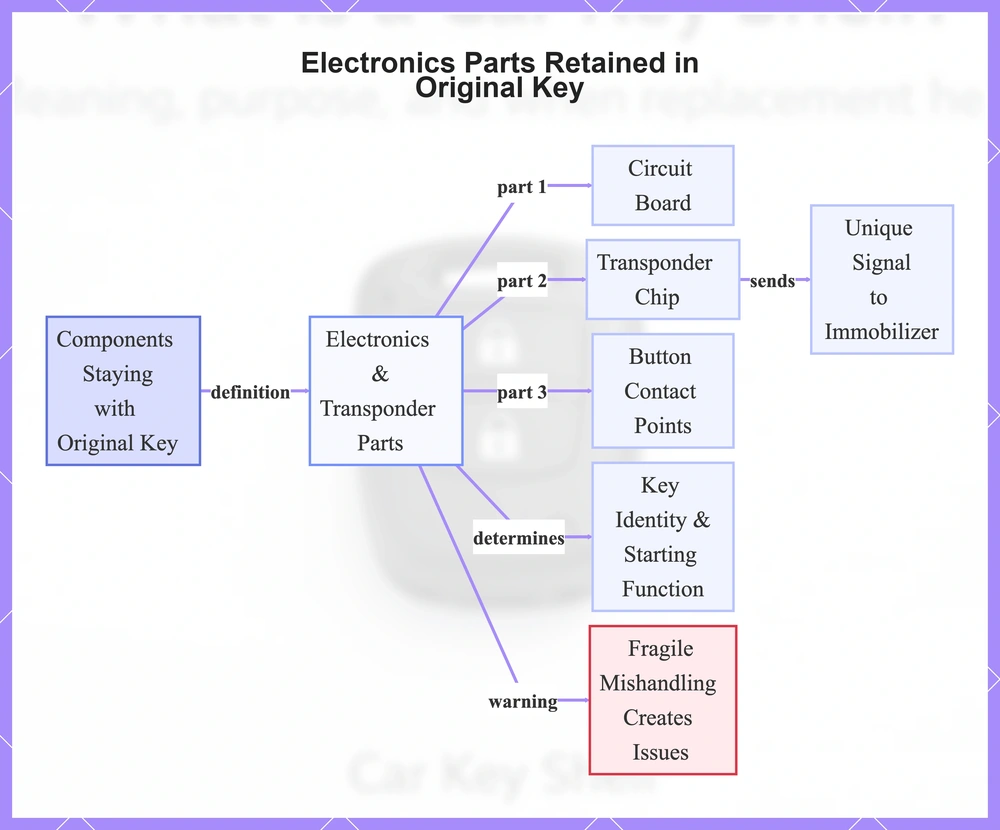
Electronics and transponder parts stay with the original key
The circuit board, transponder chip, and contact points that link to the buttons remain part of the original key during a shell replacement. These components typically determine the key's identity and starting function, as the transponder chip sends a unique signal to the vehicle's immobilizer system when applicable. Layouts can vary across key fobs, but they typically remain unaffected by the outer housing swap. These internal parts are fragile, and mishandling can create new issues.
This flowchart shows which electronics and transponder parts remain with the original key during shell replacement, their key functions, and handling caution.
Shell replacement versus battery or full key fob replacement
Car key symptoms point to different fixes: shell replacement for cracked housing or loose closure, battery replacement for weak signal or reduced range, and full key fob replacement for nonresponsive buttons or no recognition. The table below maps common symptoms to solutions.
| Replacement Type | Common Symptoms | What Changes |
|---|---|---|
| Shell replacement | Cracked housing, loose closure | Outer housing that protects internals |
| Battery replacement | Weak signal, reduced range | Battery power for remote functions |
| Full key fob replacement | Nonresponsive buttons, no recognition | Internal electronics and transponder chip |
Why a car key shell exists and what it protects during daily use
The car key shell protects the key’s internal electronics from everyday physical risks and environmental exposure. It acts as the primary barrier around components like the circuit board and transponder chip, shielding them during routine handling.
- impact from drops or bumps that can cause cracks
- grime buildup at seams and gaps
- incidental moisture exposure around edges
- button wear from repeated presses that affects responsiveness
Protection level varies by design and condition.
Carried in a pocket with coins or keys, the shell faces scuffs and dirt at seams, plus drops that test impact resistance. Humid pockets or light spills let moisture reach internals if seams weaken. Daily thumb presses cause button wear, reducing responsiveness when alignment or surface integrity fails—this wear signals replacement needs to restore protection around internals.
Car key shell vs key cover vs key case as commonly used terms
Buyers often assume "shell," "cover," and "case" mean the same key fob part because listings mix the terms. In everyday language and product descriptions, though, a car key shell serves as replacement housing while covers and cases usually add protection over the existing structure. The table below shows these differences.
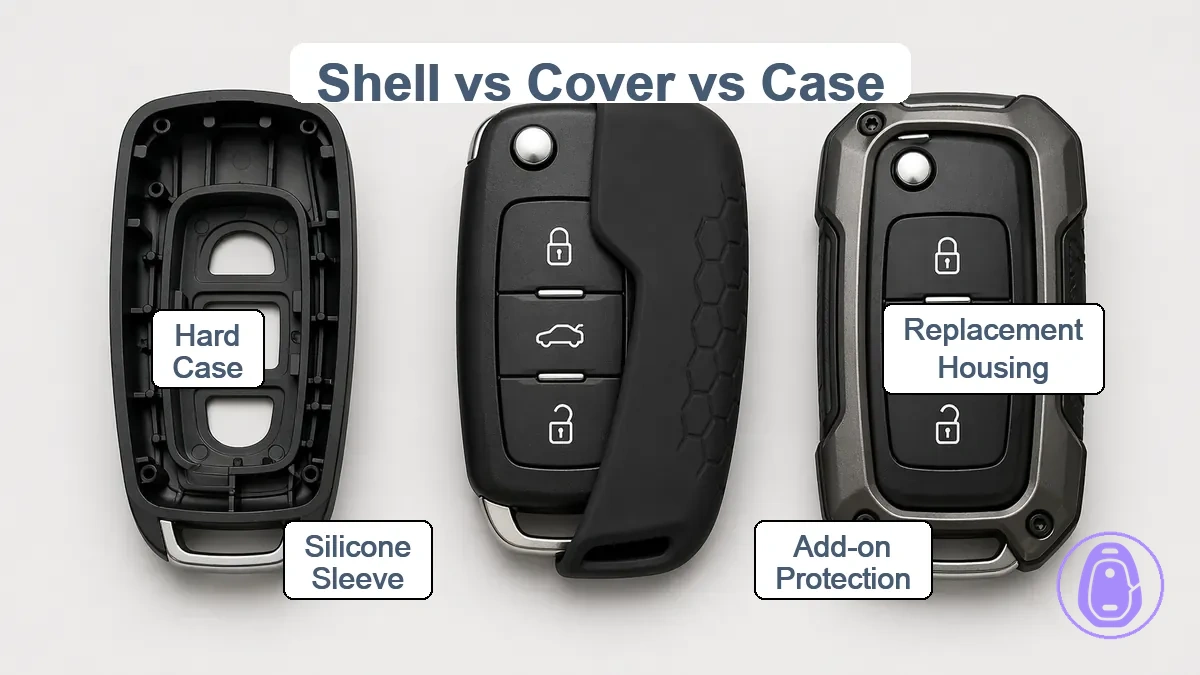
| Term | Definition | What it typically changes |
|---|---|---|
| Shell | Replacement housing for the key fob, often called outer housing; internals like the circuit board transfer into it. | The damaged outer structure, potentially improving fit, button access, and overall protection. |
| Cover | Add-on protection such as a silicone sleeve that slides over the existing key fob without disassembly. | Surface protection against scratches and drops while keeping the original housing intact. |
| Case | Hard protective case or sometimes a reference to shell or cover; functions as an accessory layer. | Added durability and feel. |
Covers and cases often work as accessory layers, while shell means replacement outer housing. For Shell vs case vs cover differences, see the dedicated comparison.
Question: Do I need a shell or just a cover?
A shell suits damaged housing needing replacement, while a cover adds protection to an intact key fob; choice depends on the issue like cracks versus surface wear.
Question: Is a key case the same as a shell?
No, a case typically provides add-on protection similar to a cover, whereas a shell replaces the outer housing; terms overlap in listings but differ in function.
When replacing the shell helps and when it will not
Cracks or loose closure in the car key shell often call for shell replacement to restore protection and usability. Absent signals or programming failures usually mean internal electronics problems, not the housing. The signs below separate shell issues from other causes.
Once physical signs point to housing failure, check the Replacement hub for safe transfer guidance.
Outcomes depend on precise fit and assembly—for instance, a warped shell may cause misaligned presses, but poor seating in the new one recreates button feel problems.
Signs pointing to shell replacement:
- Cracks along seams: weakens structure and lets grime in, typical of housing wear.
- Broken clips or stripped screw posts: can prevent secure closure due to housing wear.
- Loose closure or gaps: can lead to internals shifting, often improved by new housing.
- Mushy button feel or misaligned presses: often from warped button cutouts or rubber pad misalignment in worn shell.
- Rattling or looseness: indicates poor internal retention due to deformed housing.
- Worn button surfaces: exposes housing damage affecting press responsiveness.
Signs usually not a shell issue:
- No response across multiple buttons: suggests circuit board or contact points damage.
- Intermittent signal or range loss: typically ties to battery weakness or transponder chip.
Wear and damage signs that make the housing unreliable
- Cracks at seams with visible gaps exposing internals to dirt and moisture.
- Broken clips failing to hold housing halves together securely.
- Stripped screw posts unable to retain screws for closure.
- Looseness in blade area allowing unintended movement during handling.
- Worn buttons with eroded texture causing slippery presses.
- Fractures along closure edges widening under pressure.
Cosmetic scuffs differ from structural failure and do not necessarily require replacement.
Button feel, closure gaps, and looseness that a new shell can resolve
Housing wear often causes misaligned presses and mushy button feel in a car key shell, as warped cutouts disrupt button travel and rubber pad contact. Closure gaps, rattling movement from loose fit, and shells that pop open typically arise from degraded clips or separation in the housing halves. A well-matching replacement shell may address these symptom patterns caused by wrong shell geometry or poor seating, though improvements depend on precise fit and correct assembly.
Issues that usually point to something beyond the shell
Symptoms like no response across multiple buttons or intermittent signal often point to issues beyond the shell, such as battery problems or programming faults.
- No response from multiple buttons may indicate circuit board or contact points problems.
- Intermittent signal or reduced range can suggest battery weakness or transponder chip faults.
- Complete lack of signal from the key fob typically points to programming or immobilizer problems.
- Battery-related patterns, like weak signal that worsens over time, often signal a failing battery.
- Failure to start the vehicle despite button presses may involve immobilizer or programming faults.
- Inconsistent remote functions across buttons usually indicate electronics or programming problems.
Poor fit can affect button contact, but it does not replace programming.
Car key shell housing terminology in listings and what sellers usually mean
Car key shell listings use terms like housing and shell interchangeably for the outer structure, though meanings vary by seller or manufacturer. That variation often confuses buyers about internals. The glossary below clarifies typical usage.
- Housing
- Outer shell or casing forming the main body; typically a replacement part without internal electronics.
- Shell
- Common shorthand for the outer housing; emphasizes the empty protective structure, distinct from full key fobs.
- Outer case
- External casing or shell housing that encases key internals; often paired with button housing in listings.
- Empty shell
- Outer housing only, typically without electronics, circuit board, or transponder chip; for transferring existing internals.
- Button housing
- Shell portion for button area and outer case alignment; typically part of full housing, sold to match button layout.
- Casing
- Secondary term for shell or outer case; signals housing only, no electronics, despite misleading phrases like "complete housing set" that buyers may misread as including internals.