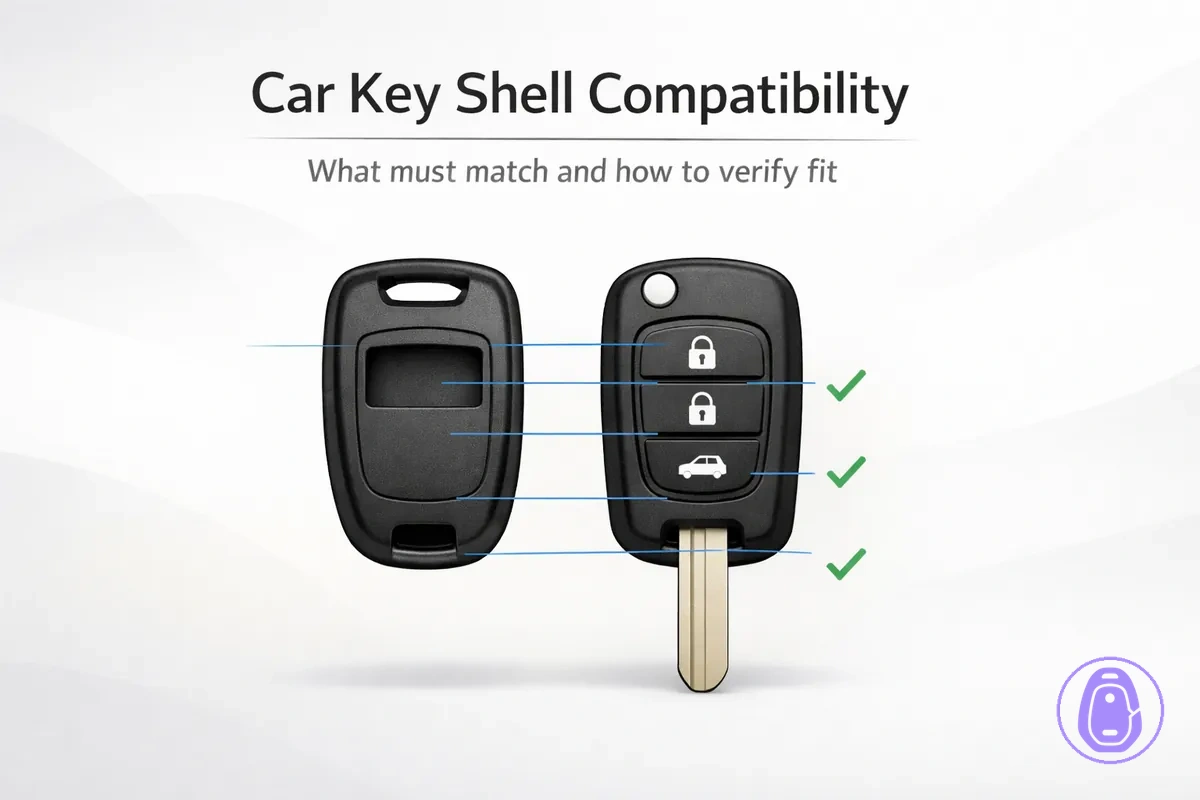
Car key shell compatibility: how to confirm the right housing fit
Car key shell compatibility means verifying a replacement housing fits key fob internals for proper assembly and basic operation. Check mechanical interfaces to ensure flush closure and button actuation. Vehicle programming or immobilizer pairing stays out of scope here, since those rely on electronics.
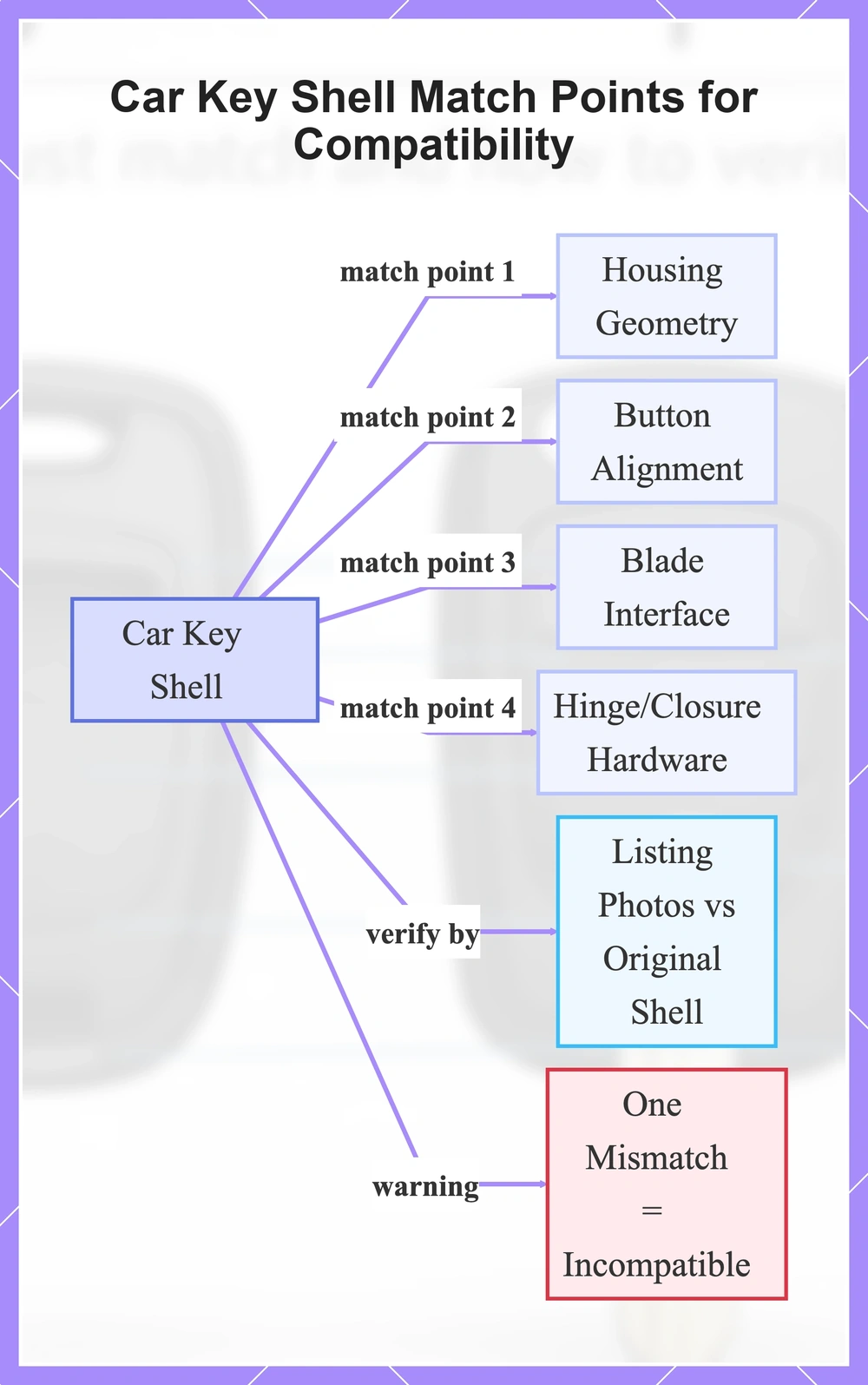
Match points group into four families: housing geometry for shape and closure, buttons and pad alignment for press response, blade interface for seating, and hinge or closure hardware for folding. Verify multiple families to cut mismatch risk—a poor clip alignment alone can lead to gaps or wobble despite good overall shape. The sections below cover these in detail.
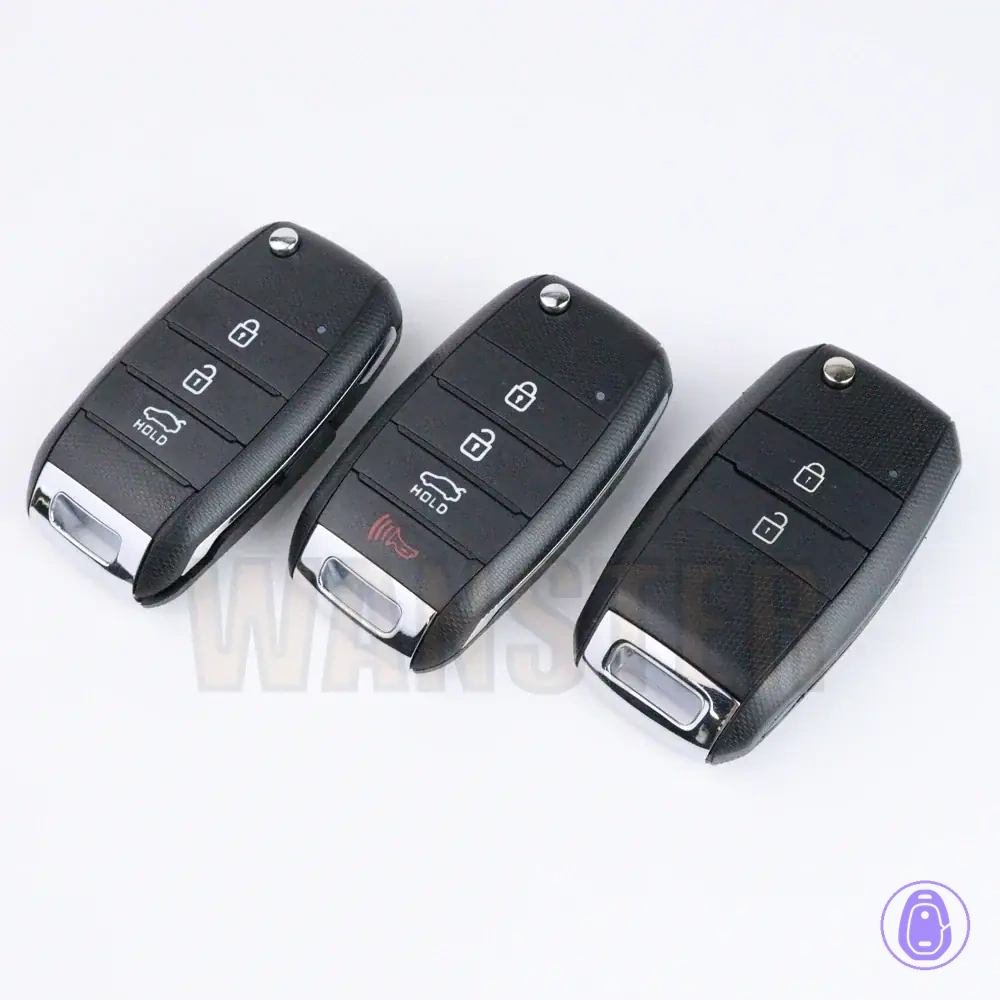
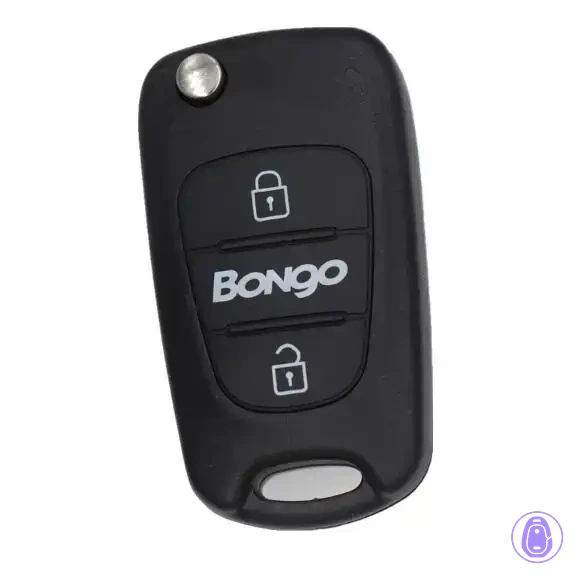
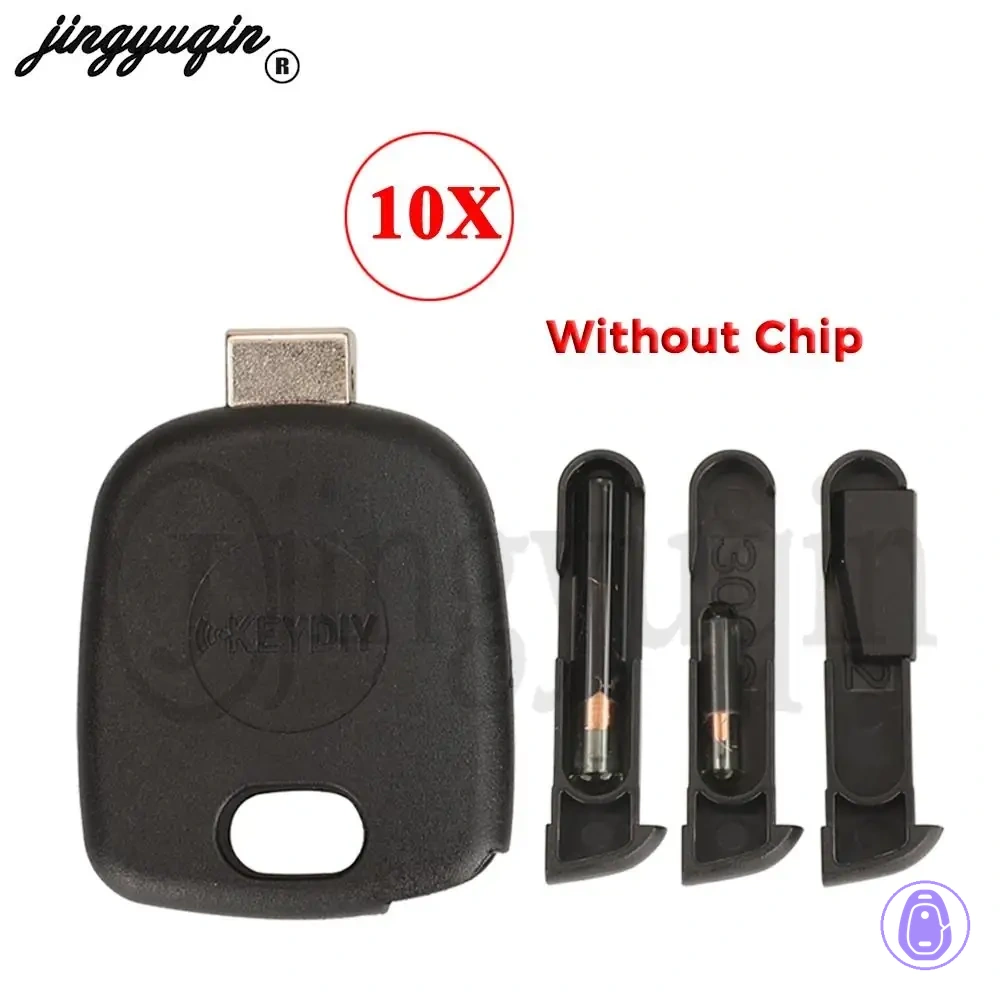
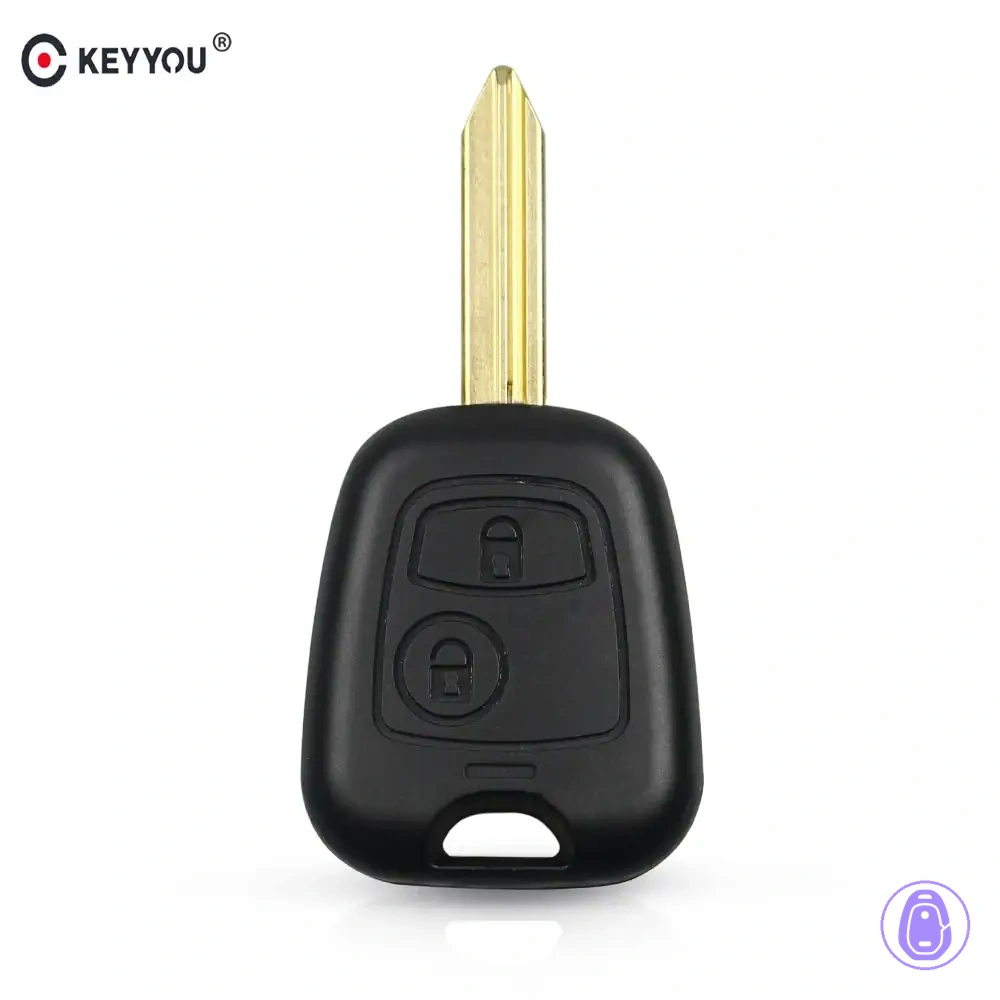
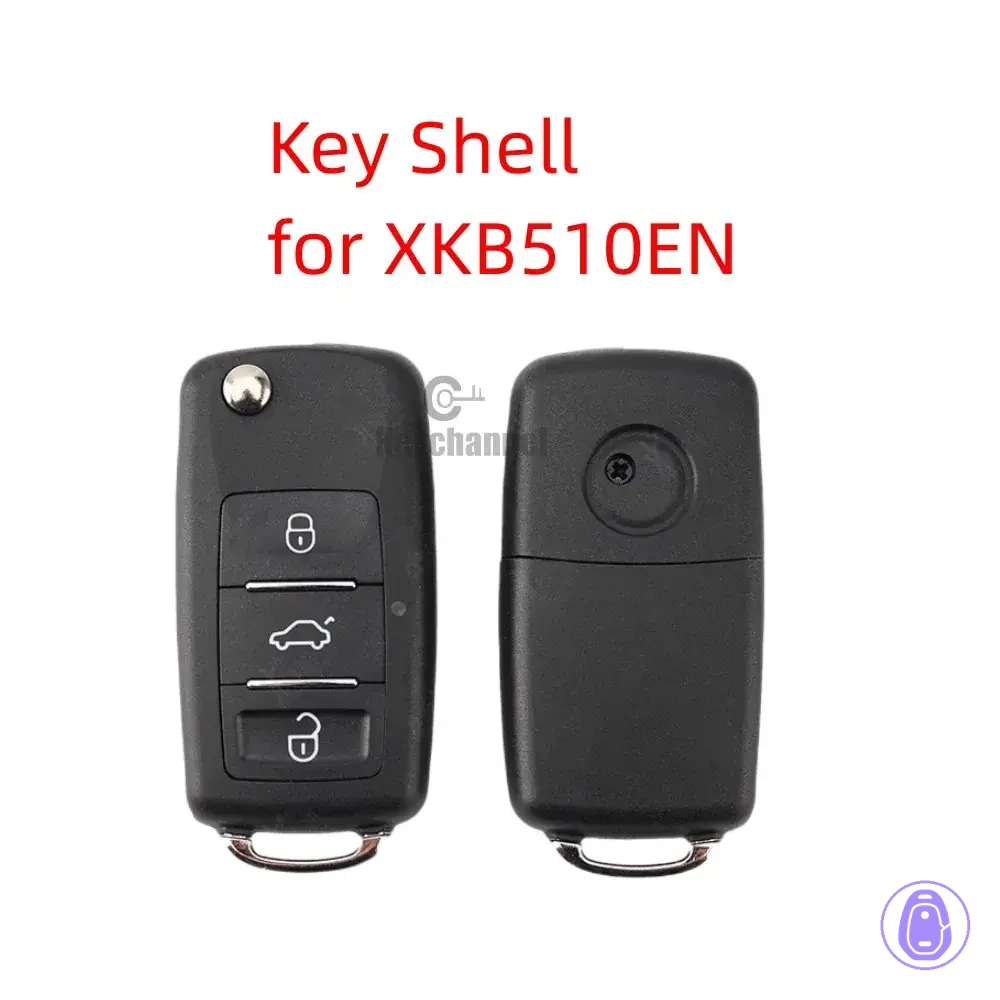
- Housing geometry: outline, seam lines, thickness, and clip positions that affect flush closure and gaps.
- Buttons and pad alignment: cutout spacing, membrane seating, and travel depth for press transfer.
- Blade interface: slot depth, retention style, and stop points that can reduce wobble or loose fit.
- Hinge and closure: pivot location, latch type, and hardware alignment for operation without binding.
Treat these families as a checklist to verify fit before transfer.
What car key shell compatibility covers and what it does not
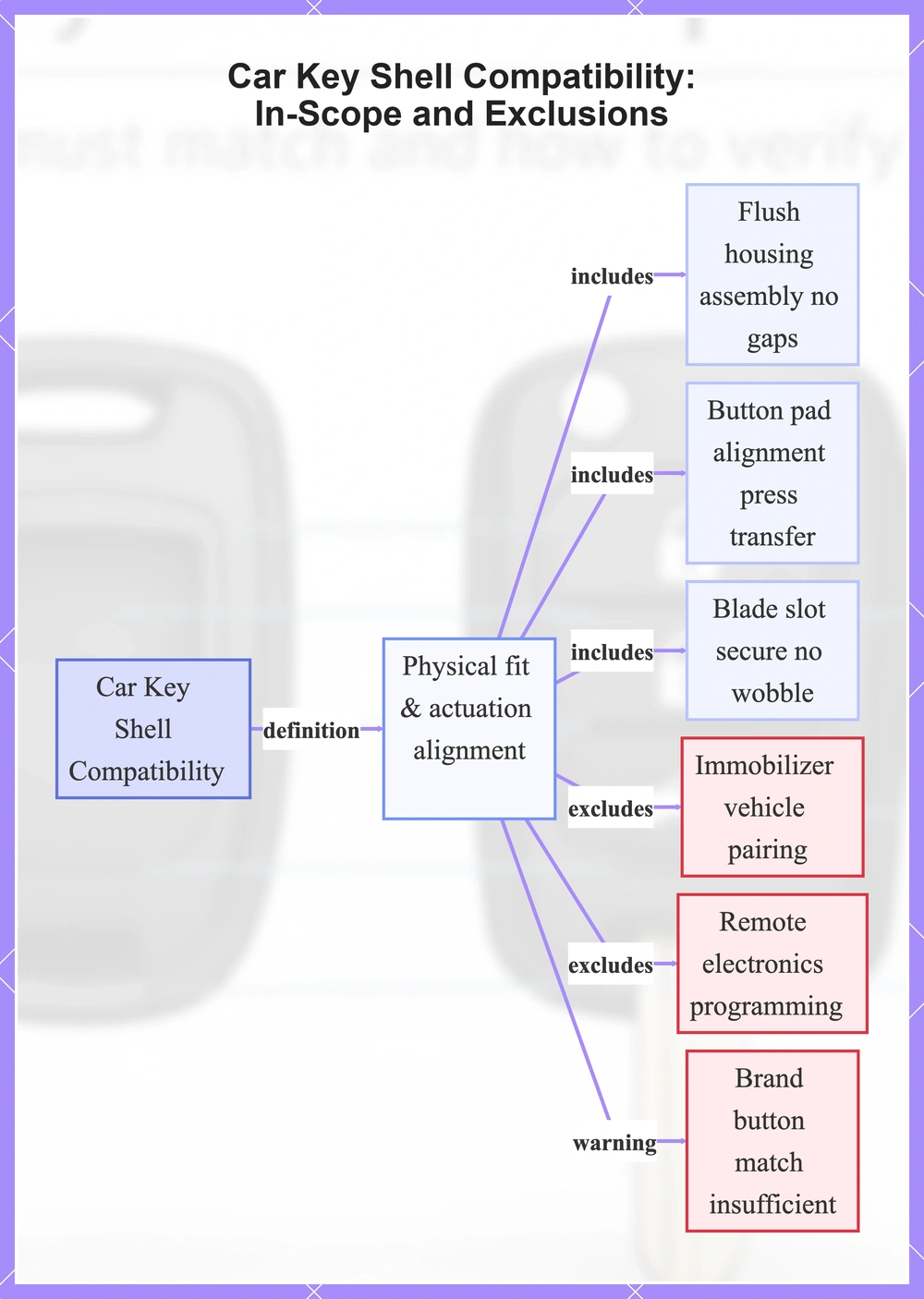
Car key shell compatibility means physical fit plus functional actuation alignment for a car key shell housing.
Such fit lets internals seat securely for those functions, though results vary by design. Matching the same brand or button count alone may not suffice due to design variations across models.
- In-scope: housing geometry for close flush assembly without gaps or force.
- In-scope: button layout and pad alignment for press transfer.
- In-scope: blade slot and retention points to secure the blade without wobble.
- In-scope: hinge and closure hardware for folding and locking positions.
- Out-of-scope: immobilizer or vehicle pairing functions.
- Out-of-scope: remote electronics programming.
Shell housing fit contrasts with remote electronics or programming.
This flowchart defines car key shell compatibility, listing its physical in-scope aspects and key out-of-scope functions.
Fit-determining match points for a compatible key shell
Car key shell match points—housing geometry, button alignment, blade interface, and hinge/closure hardware—determine assembly and function. The interfaces need to align for proper closure and actuation, as one mismatch often overrides the rest. Don’t rely on a single cue to verify compatibility.
Verify match points with listing photos against your original shell, followed by physical tests. Look for even seams, responsive presses, secure retention, and smooth folding as positive signs.
See the dedicated guide on Car key shell parts that affect fit for details. If housing geometry matches but button alignment fails, treat it as not compatible.
Key interfaces appear in the mini-checklist below:
- Housing geometry
- Outline shape and overall dimensions for external match
- Seam lines and thickness at edges for flush assembly
- Clip positions and latch points for closure
- Button alignment
- Button layout spacing and cutout positions
- Pad or membrane seating depth for press transfer
- Travel distance and internal contact points
- Blade interface
- Slot dimensions and seating depth
- Retention style and hardware fit
- Stop contact to reduce wobble
- Hinge/closure hardware
- Pivot location and movement range
- Latch type and lock positions
- Play tolerance and binding resistance
This flowchart shows the essential match points that determine car key shell fit compatibility, along with verification steps and mismatch warnings.
Housing geometry, thickness, and clip alignment
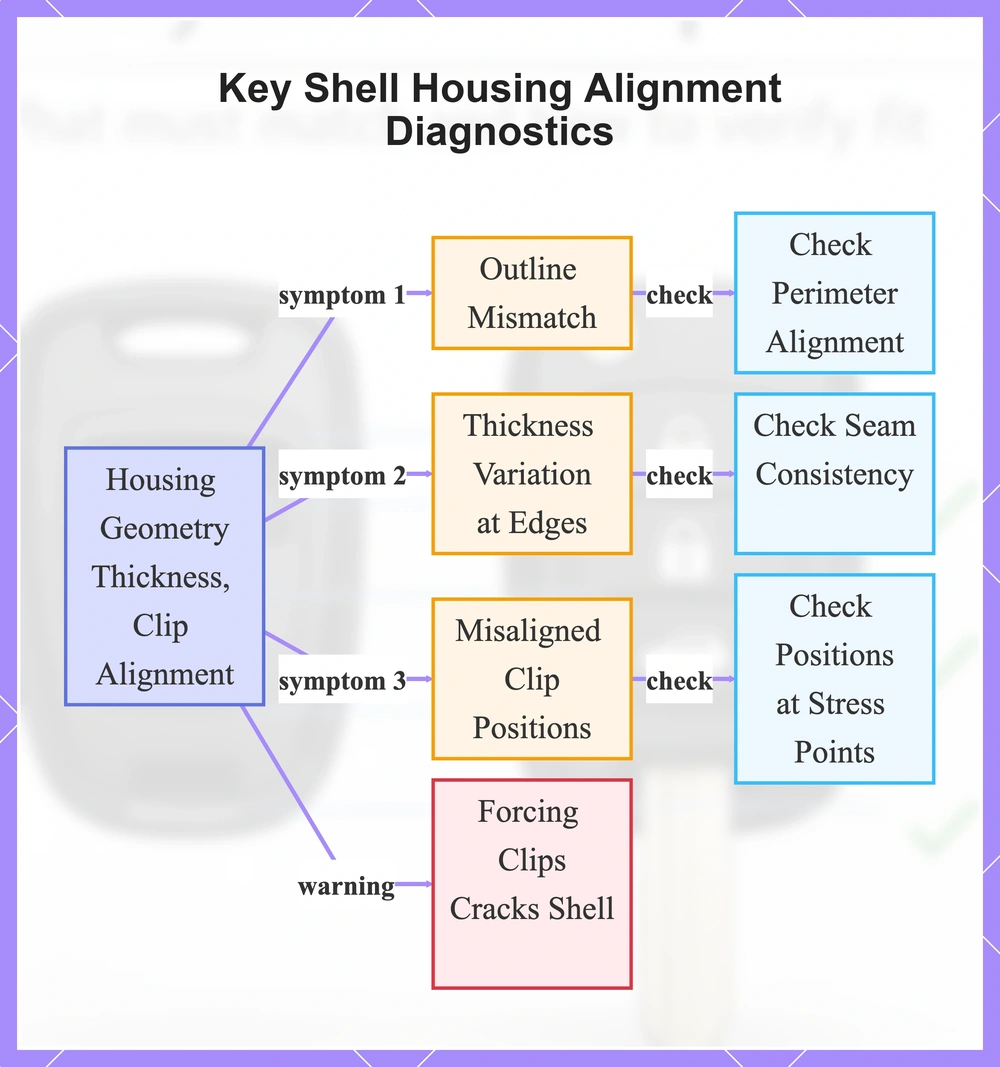
Housing geometry, thickness, and clip alignment decide if a car key shell closes flush and stays latched. Typical problems show up as edge gaps, uneven seams, or clips that won't hold. Look for signs like smooth closure without force.
Forcing clips can crack the shell.
- Outline mismatch can indicate housing shape problems and peripheral gaps; check perimeter alignment.
- Seam offset can indicate closure edge misalignment with visible separation; check seam uniformity.
- Misaligned clip positions can indicate latch errors that prevent engagement; check positions at stress points.
- Thickness variation at edges can indicate uneven distribution causing wobble or gaps; check seam consistency.
- Latch recess mismatch can indicate poor clip seating and incomplete closure; check recess and clip profile.
- Persistent gaps can indicate geometry tolerance issues; check seam and clip points.
This flowchart shows symptoms from housing geometry, thickness, and clip alignment issues in car key shells along with targeted checks and a warning.
Button layout, button pad alignment, and internal press points
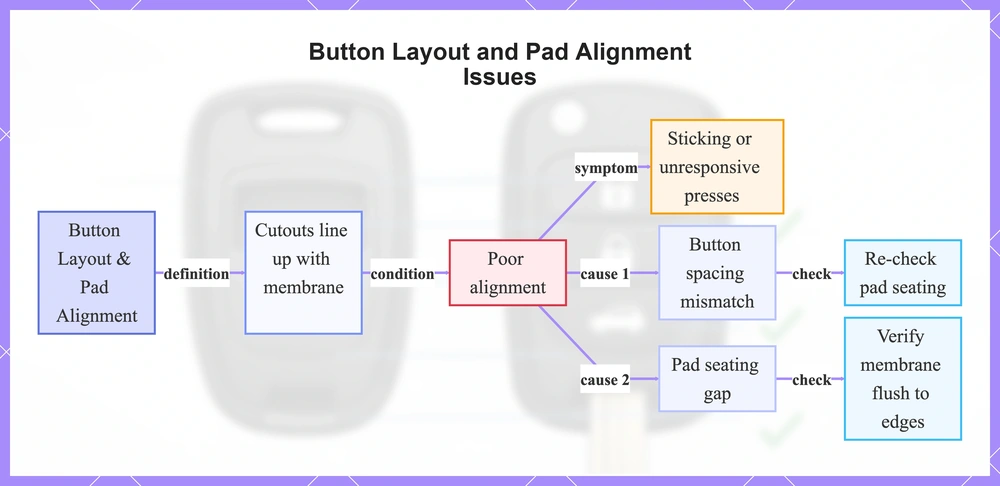
The button layout and button pad alignment in a car key shell set how buttons feel when pressed and whether they actuate right, as cutouts line up with the membrane below for smooth press transfer. Poor alignment between housing cutouts and button pad often leads to sticking or unresponsive presses.
Check using cues like button travel and seating; “buttons feel wrong” often means housing misalignment, while “buttons do nothing” may point to other issues.
- Button spacing mismatch → cutouts do not align with membrane positions → re-check pad seating in the housing.
- Pad seating gap → button pad shifts during press → verify membrane sits flush against cutout edges.
- Travel depth variation → presses bottom out unevenly → inspect alignment of pad height to cutout depth.
- Press-point offset → force does not reach membrane center → compare cutout layout to pad contact points.
- Membrane overhang → edges catch on housing → re-check button pad trimming against shell interior.
For detailed matching guidance, see Button layout and button pad matching.
This flowchart shows how button layout and pad alignment determine car key button performance, along with poor alignment symptoms, key causes, and verification checks.
Blade slot interface and retention style inside the shell
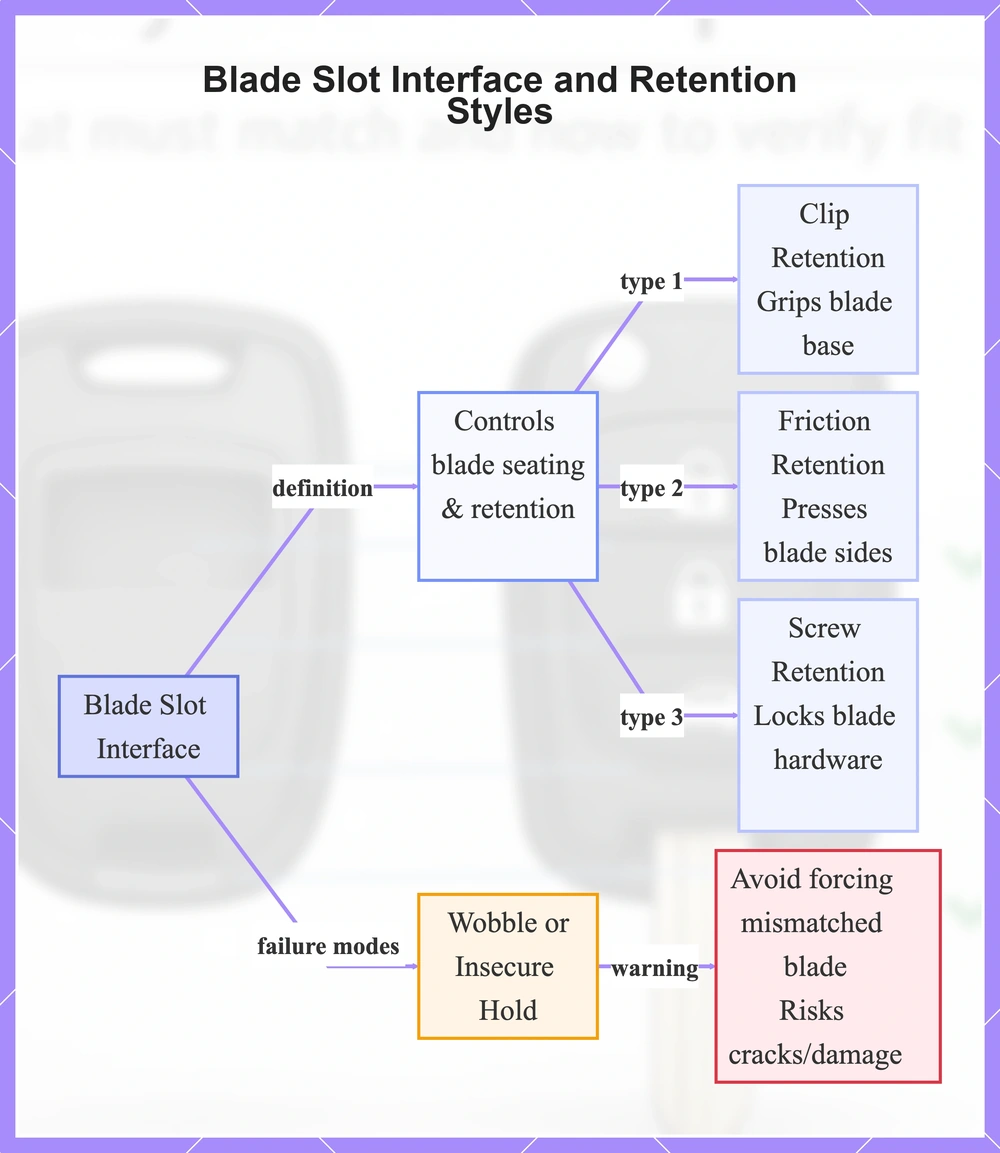
The blade slot interface in a car key shell controls blade seating and retention for secure use during folding. Common failure modes include wobble or insecure hold that can cause blade shift. Avoid forcing a blade into a mismatched slot, as this risks shell cracks or blade damage.
- Clip retention: grips blade base with clips.
- Friction retention: relies on slot walls pressing blade sides.
- Screw retention: locks blade with hardware.
- Seating depth: full insertion to stop without play; mismatch leads to binding.
- Blade wobble: side movement when seated; signals loose slot or retention.
- Stop contact: firm end-stop engagement; poor contact indicates depth mismatch.
- Retention hardware fit: secure clips or screws; looseness allows movement.
- Secure lock: holds under pressure; points to retention mismatch.
For checks on blade types that affect slot fit, see Blade type and hinge matching.
This flowchart explains the blade slot interface in car key shells, its retention types, common failure modes, and important warning.
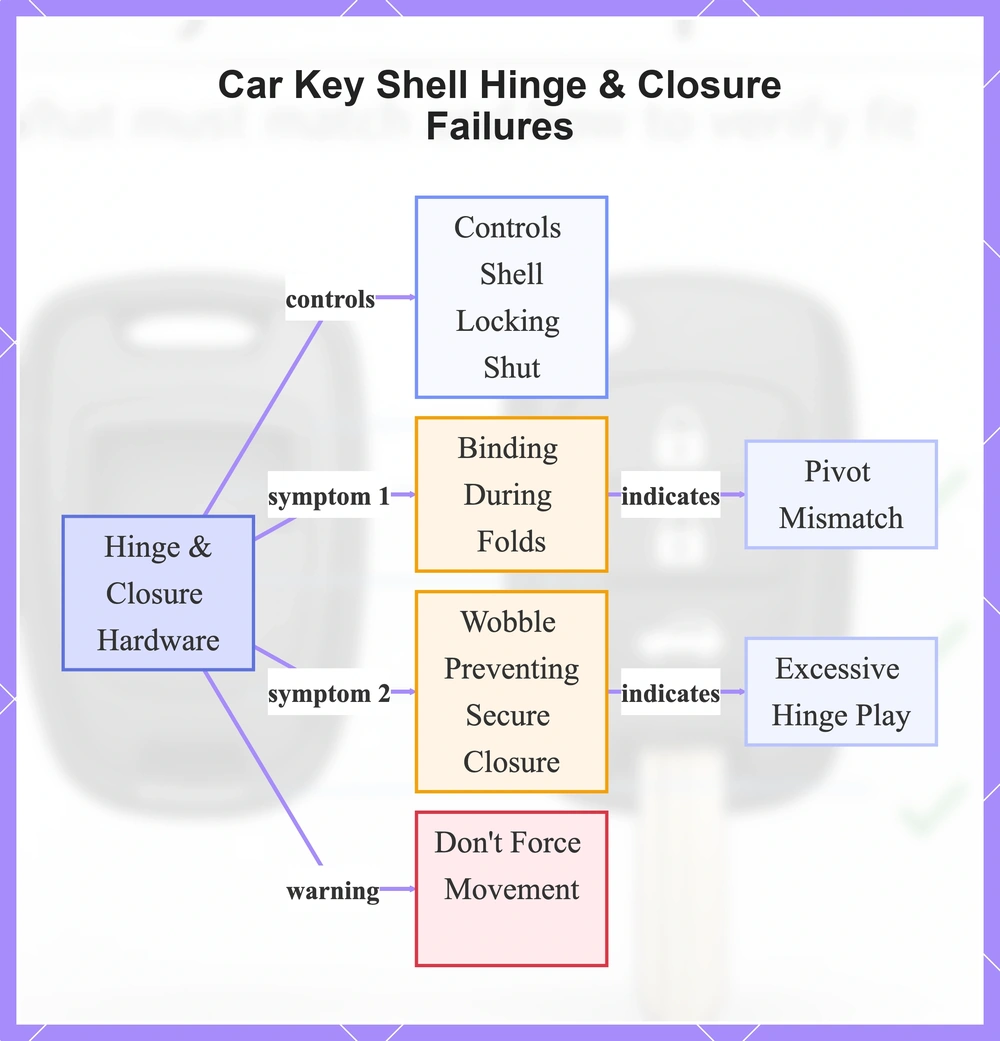
Hinge and closure hardware that controls how the shell locks shut
Hinge and pivot geometry, plus closure hardware in a car key shell, affect folding behavior, lock positions, and whether the shell stays shut.
Common failure modes include binding during folds or wobble that can prevent secure closure. Binding often points to pivot mismatch, while excess play suggests hinge looseness; don’t force movement to avoid cracking the shell.
- Pivot location mismatch can cause binding, as the hinge fails to rotate smoothly through full travel.
- Excessive hinge play can cause wobble, making the shell feel unstable when locked.
- Closure latch type incompatibility can prevent the shell from snapping into lock position.
- Pivot-end screw misalignment can result in incomplete folding or failure to hold the closed state.
- Clip alignment issues at the hinge end can allow unintended opening or rattling in lock position.
- Lock position variance across designs may cause the shell to bind or not latch flush.
Caution: Forcing movement risks permanent damage to the hinge or latch.
See Blade type and hinge matching for details on related fit points.
This flowchart shows how hinge and closure hardware affects shell locking, common failure symptoms like binding and wobble, their causes, and a key warning.
How to verify shell fit before ordering or swapping housings
Check car key shell fit with visual inspections from listings, then hands-on physical tests.
Look for mismatches in outline, seams, buttons, blade area, and hinge before buying or swapping. Matching cues across these points cut wrong-fit risks, but results depend on design.

- Compare overall outline and shape using listing photos against your existing shell; mismatches in profile can indicate poor geometry fit.
- Check seam lines and clip positions in images for alignment with your shell; uneven seams often signal closure issues.
- Verify button layout and spacing from multiple angles; differing cutouts may prevent proper pad alignment.
- Examine blade slot dimensions and retention style in photos; incorrect slots can cause wobble or insecure seating.
- Inspect hinge pivot location and closure hardware via close-up views; off-position pivots typically lead to binding.
- Once in hand, align shells side-by-side for outline match without forcing; gaps suggest geometry mismatch.
- Test dry closure behavior; clips that fail to latch smoothly may indicate alignment problems.
- Press buttons lightly to assess travel feel; sticking or mushy response often points to pad misalignment.
- Seat the blade temporarily; excessive play can reveal slot or retention incompatibility.
- Manipulate hinge motion gently; binding or excess wobble typically confirms pivot mismatch.
Stop if multiple cues fail—forcing assembly risks damage. For a detailed workflow, see the Car key shell fit check workflow.
Checks from photos and listings that predict a match
If you can't test physically, look at photos and listings for car key shell fit clues like the outline, seams, buttons, blade area, and hinge in clear multi-angle shots.
- Shape and seam cues
- Outline matches your current shell's shape, particularly dimensions and curves.
- Seam lines line up evenly, without offsets or irregularities hinting at thickness issues.
- Clip or latch spots show up visible and even, suggesting good flush closure.
- Button cues
- Button layout spacing and shape line up with cutout size and position.
- Button pad shows a matching membrane outline below if you can see it.
- Button travel looks even in any press demos or side shots.
- Blade and hinge cues
- Blade slot depth and width fit your blade snugly with little play.
- Hinge pivot spot and style line up, screws or clips included.
- Folding action looks smooth in demo pics, no binding.
Matches in all areas boost confidence in fit, but watch for tricky lighting or angles; ask sellers to confirm key measurements.
Physical checkpoints that confirm the shell will close flush
Close flush means a Car key shell sits evenly with seam uniformity and no gaps where housing halves meet. Proper assembly shows low internal stress and supports button actuation via alignment. Watch for stress indicators—forcing closure risks cracks.
If it only closes with force, treat it as a mismatch.
- Closure alignment: Housing halves line up evenly along all edges → passes with straight, matching outlines → offset edges suggest geometry mismatch.
- Clip engagement: Clips snap into place with firm hold → latches without popping → weak snap or pop-out suggests clip position or tolerance issues.
- Seam uniformity: Seam runs evenly without gaps or bulges → flush contact around the perimeter → uneven seam or gaps indicate alignment or thickness mismatch.
- Button travel feel: Buttons depress with smooth travel → consistent press depth across buttons → sticking or uneven feel points to button pad seating problems.
- Hinge motion: Hinge opens and closes smoothly without binding → motion stays controlled with lock positions → wobble or binding suggests pivot or hinge geometry mismatch.
- Latch hold: Shell stays closed under light finger pressure → firm snap hold → easy opening or rattle indicates latch or clip engagement failure.
What can differ without affecting shell fit
It's easy to confuse cosmetic differences with fit-critical differences, rejecting compatible car key shells over superficial traits as false negatives. Factors like appearance differences often do not change car key shell compatibility when fit points align, though exceptions can exist. Fit points and internal interfaces still matter.
- Cosmetic finish: Surface sheen variations typically leave housing geometry, button alignment, and closure unaffected since they sit atop the structure; exceptions arise if a rough finish catches on internal components.
- Superficial texture: Minor grip or tactile changes usually do not shift fit points or blade seating as they remain external; an exception occurs if texture buildup hinders clip latching over time.
- Branding marks: Small logos or engravings seldom impact compatibility by altering mechanical interfaces; exceptions may involve oversized marks blocking hinge movement.
- Color variations: Pigment differences typically have little influence on seam flushness or pad alignment since they affect only the outer layer; rare exceptions tie to material inconsistencies mimicking structural flaws.
Rule out these first, then follow Selection guidance to confirm quality alongside fit points.
Mismatch symptoms and the most likely mismatch point
Map symptoms to likely mismatches to link common car key shell fit issues to probable interfaces for targeted re-checks. This reveals whether closure gaps, button sticking, blade looseness, or hinge binding come from specific match points. Stop forcing fit if resistance builds, as it signals a poor match and risks damage—choose a different shell instead.
A car key shell fit issue during trial assembly calls for observing the dominant symptom to narrow the likely mismatch. Assembly error can mimic mismatch, so pause to verify positioning first. The groups below pair symptoms with common interfaces and re-check cues. Re-check the matching interface for confirmation.
- Shell gaps, won't close, or clips won't latch
- Gaps at seams often indicate housing geometry mismatch; re-check outline and thickness cues.
- Clips popping repeatedly suggest latch position mismatch; re-check clip alignment points.
- Refusal to latch points to internal obstruction mismatch; re-check component placement.
- Uneven seams signal seam line mismatch; re-check closure uniformity.
- Buttons stick, feel misaligned, or don't press correctly
- Sticking motion typically shows button cutout mismatch; re-check layout spacing.
- Misaligned feel often ties to pad seating mismatch; re-check membrane alignment.
- Shallow travel suggests depth mismatch; re-check press point contact.
- Erratic response indicates offset mismatch; re-check pad positioning.
- Blade sits loose, doesn't seat, or retention doesn't hold
- Loose positioning commonly reflects slot depth mismatch; re-check seating stop.
- Play or wobble points to retention hardware mismatch; re-check secure fit.
- Failure to hold suggests interface style mismatch; re-check blade contour match.
- Shifting during handling indicates retention mismatch; re-check slot retention cues.
- Hinge binds, wobbles, or won't lock in position
- Binding friction often signals pivot location mismatch; re-check hinge geometry.
- Excess play typically shows tolerance mismatch; re-check pivot hardware seating.
- Lock refusal points to latch mismatch; re-check end-position alignment.
- Stiff movement suggests play restriction mismatch; re-check hinge clearance.
Shell gaps, won't close, or clips won't latch
Car key shell closure failures typically show visible gaps along the seam, uneven seam lines, or clips that pop open and won't latch securely. Such issues usually stem from housing geometry problems, clip misalignment, or internal obstructions that block flush closure.
Don't force it closed—that increases crack risk. If the clips won't engage without force, count it as a mismatch.
- Visible gap at the seam signals housing geometry misalignment; recheck outline fit for even edges.
- Uneven seam points to thickness mismatch or seam variation; check thickness at stress points for uniform contact.
- Clips popping out or failing to latch means position mismatch; verify clip spots and latch fit.
- Resistance preventing full closure suggests obstruction; look for shifted parts blocking clip snap.
- Partial latch that pops free indicates latch obstruction or misalignment; ensure no debris interferes.
Buttons stick, feel misaligned, or don't press correctly
Issues like sticking buttons, misaligned presses, or uneven travel in a car key shell point to cutout and pad seating mismatches. That happens when the button pad doesn't line up right with the housing cutouts, messing up the press points. Tell housing problems apart from electronics ones with no response.
- Sticking buttons mean cutout misalignment squeezes the pad unevenly; check seating depth again.
- Misaligned travel feel hints at shifted press points; confirm the layout sits right over the pad.
- Mushy travel shows poor pad seating; look for gaps at press points.
- Jam on release flags cutout edges catching the pad; verify evenness around buttons.
- Inconsistent response comes from cutout interference in travel; check pad under buttons.
Blade sits loose, doesn't seat, or retention doesn't hold
A loose blade in a car key shell usually signals a mismatch in the blade slot interface or retention style—the blade won't seat fully or hold steady when folding or using it. Look for visible play, partial insertion, or shifting, stemming from differences in slot depth, retention hole position, or hardware fit.
View these as incompatibility clues, not something to force, since that can damage the shell or internals.
- Blade wobbles side-to-side: suggests slot width or retention hole mismatch; check blade shank fit in the slot profile and retention ball or clip engagement in the hole.
- Blade does not seat to full depth: typically stop contact mismatch; compare blade insertion limit to the shell's internal stop, avoiding excess protrusion or gap.
- Retention slips under light pressure: indicates missing hardware or poor fit such as absent clips or undersized holes; verify retention mechanism and blade hole match.
- Blade shifts during fold: often hinge-area slot issue; check pivot-end wobble and retention hold during folding.
Hinge binds, wobbles, or won't lock in position
Symptoms like binding, wobbling, or failure to lock at positions prevent smooth folding and secure closure in a car key shell, making daily use frustrating.
Binding can signal friction from pivot misalignment, while excess play often means loose hinge hardware or lock position mismatch. Don’t force the hinge.
- Hinge binding with extra friction during fold points to pivot geometry mismatch; check pivot location alignment again.
- Excessive play or wobble in hinge movement suggests loose hardware; check pivot seating and retention points again.
- Failure to lock at closed position usually ties to latch or closure-end mismatch; check lock position geometry again.
- Jam on partial open points to friction buildup; check overall pivot and hinge play balance again.
- Looseness preventing stable lock position signals hardware play; check closure hardware fit again.
After fit confirmation: transfer limits and when to choose a different shell
Fit confirmed for a car key shell means the housing assembles without immediate gaps, binding, or misalignment in key interfaces like closure and hinge points. It verifies basic physical tolerance between the shell housing and internal components but does not ensure seamless long-term usability or resistance to daily wear. A shell that fits initially can still develop issues under repeated stress.
Watch for decision signals like inconsistent actuation feel, hinge play beyond normal tolerance, or closure stress that hints at future cracks or looseness. These indicate the shell may not hold up during component transfer or everyday handling. A fit that seems acceptable at first can differ from one that remains usable long-term. When these limits appear, choose a different shell to avoid rework; after fit confirmation, follow the Replacement steps after fit confirmation only when signals are minimal.
- Excessive hinge play: suggests poor pivot tolerance that can worsen wobble over time; choose a different shell to reduce loosening risk.
- Stiff closure snap: indicates stress points prone to cracking with use; select another shell for safer assembly.
- Mushy actuation feel: points to button pad variance that may degrade press response; opt for a better-matched shell.
- Uneven seam pressure: signals tolerance issues risking gaps later; choose a different shell before transfer.
- Blade retention slip: shows interface limits that compromise security; pick an alternative shell promptly.
- Visible flex under light force: warns of material stress near hinge or closure; switch shells for better durability.